
In the United States, approximately 7.5 million students receive special education services under the Individuals with Disabilities Education Act (IDEA). That number is expected to rise to 8.75 million by 2030, driven by shifting demographics and increasing identification of disabilities (Arundel, 2022). These students depend on Individualized Education Programs (IEPs) to access the tailored supports necessary to receive a Free Appropriate Public Education (FAPE).
A Technological Divide Between Schools and Parents
School districts use sophisticated IEP software to track student progress, schedule services, and ensure legal compliance. But parents are largely excluded from these systems. Most IEP platforms are designed for internal use only, leaving families with no central way to manage their child’s educational data.
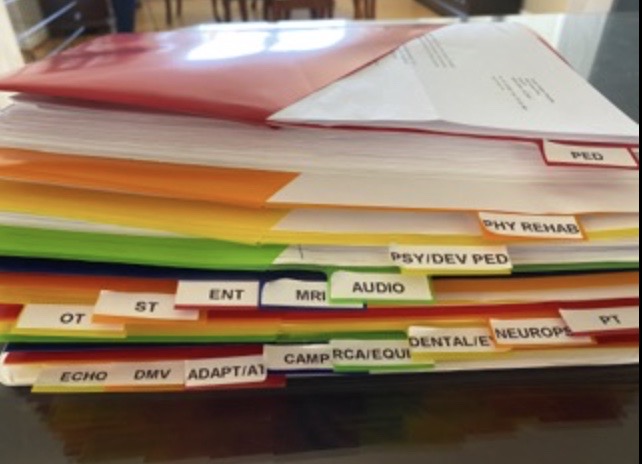
As a result, parents are left juggling:
- Scattered emails and paper files
- Independent evaluations and therapy notes
- Meeting minutes and service logs
This burden is particularly severe for low-income families or those raising children with multiple or intensive disabilities.
The Hidden Costs of Advocacy
Raising a child with a disability is significantly more expensive than raising a non-disabled child. According to IRL Social Skills (2025), lifetime costs range from $1.4 to $2.4 million, with annual costs for therapies, adaptive equipment, and educational support often exceeding $60,000.
But the costs don’t stop there. When parents must fight for appropriate services:
- Early legal prep often costs $3,000–$10,000
- Due process hearings can cost $10,000 to $80,000+
- Most costs are not reimbursed—even when the family wins
Lower-income families are routinely forced to abandon valid claims simply because they can’t afford to pursue them.
A System That Reinforces Inequity
The special education due process system was designed to protect families, but in practice, it often does the opposite. Between the 2018–19 and 2019–20 school years, due process filings rose 4.8%—a sign of increasing tension between families and schools (GAO, 2003).
But most parents:
- Can’t afford attorneys or expert witnesses
- Don’t have access to the records needed to build a case
- Are up against school systems that control the data and tools
This creates a massive power imbalance that denies many children the services they are legally entitled to.
The Problem: No Parent-Facing Platform
Despite a booming special education software market—projected to reach $23 billion by 2034—virtually no tools are designed for parents. What exists is often:
- School-facing only
- Expensive or proprietary
- Not tailored for families managing complex IEPs and services
Families are left to cobble together solutions using Google Drive, emails, and calendar apps. There’s no unified platform to help parents manage their child’s education holistically.
The Solution: IEPNotes by National Fair Learning Initiative
The National Fair Learning Initiative (NFLI) is developing IEPNotes, an innovative, AI-powered platform built for parents, not just schools. It will empower families—especially in underserved communities—to:
- Organize IEP documents, evaluations, and service logs
- Analyze trends in progress and service delivery
- Get AI-driven insights and IEP recommendations
- Advocate confidently without needing a lawyer
By reducing the need for expensive advocates or litigation, IEPNotes helps level the playing field and ensures that parents have the tools to hold schools accountable.
Why It Matters
Families shouldn’t need a law degree—or a $10,000 retainer—to ensure their child receives a fair education. They need accessible, digital tools designed with them in mind. As the need for special education services grows, so too must our commitment to parent empowerment.
IEPNotes isn’t just software.
References
- Arundel, K. (2022, April 12). Remote learning special ed litigation lower than expected. K-12 Dive
- IRL Social Skills. (2025). Cost of raising a child with a disability
- American Association of School Administrators (AASA). (2002). Rethinking Special Education Due Process
- NSEAI. IEP vs. Due Process
- U.S. Government Accountability Office (GAO). (2003). Special Education Dispute Trends
- U.S. Department of Education. (2021). 42nd Annual IDEA Report
- Lieberman, M. (2023, Jan 10). Special education disputes are rising. K–12 Dive