
As a parent of a child with dyslexia, I know that reading can feel like a daily uphill battle. My son is bright, creative, and full of ideas—but when it came to grade-level chapter books, decoding the text was exhausting and discouraging. He wanted to keep up with his peers, but the effort it took just to read a single page left him frustrated and disengaged.
Then one of his teachers introduced a solution that changed everything: Audible.
How Audible Became a Lifeline
Instead of forcing every student to struggle through reading the same way, his teacher embraced a multi-sensory learning approach. For key class novels, she provided:
- The print version of the book
- The Audible audiobook so students could listen and follow along
- Visual PowerPoint slides summarizing each chapter with key vocabulary, images, and themes
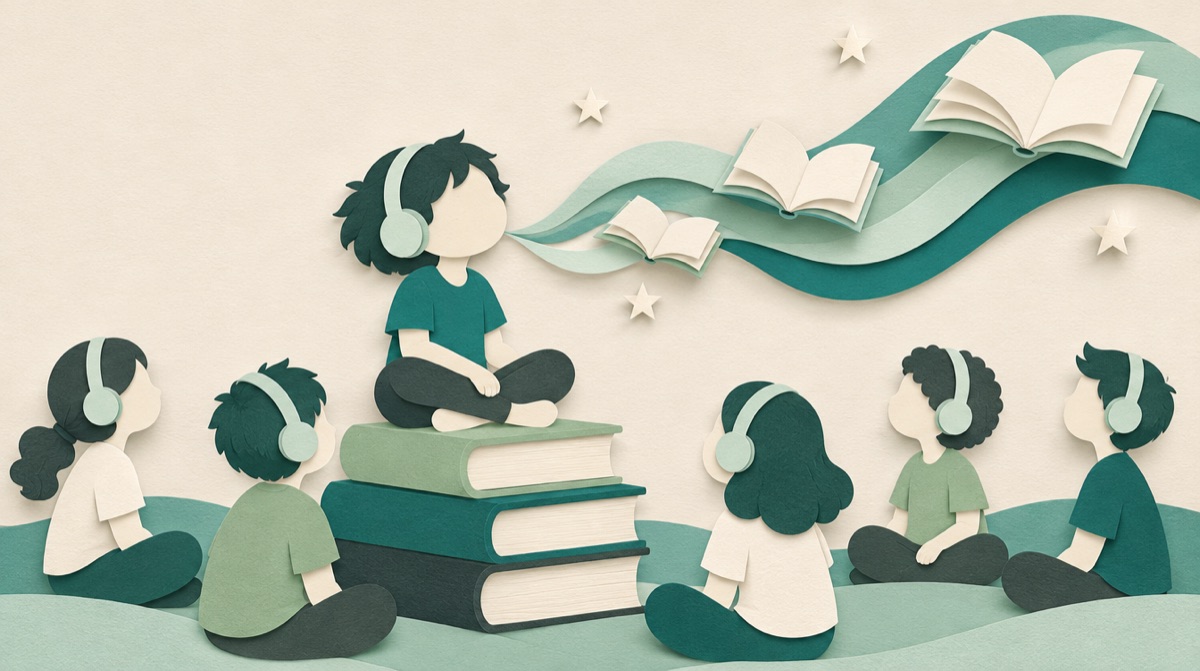
This combination allowed my son to access the content in a way that made sense for him. He could listen to the audiobook while following along in the physical book, reinforcing comprehension through sound and sight. Then the PowerPoints gave him visual cues to retain what he learned.
Why This Worked So Well
For kids with dyslexia, it’s not about intelligence—it’s about how they access information. Listening to a story read aloud by a fluent narrator allowed my son to enjoy books he wouldn’t have otherwise touched. He could participate in classroom discussions, write about characters, and feel included and successful.
Audible helped him:
- Build vocabulary
- Improve comprehension
- Feel less anxious about reading
- Fall in love with storytelling again
Supporting Diverse Learners with Audiobooks
Audible isn’t just for leisure—it’s a powerful tool for inclusive education. Teachers and parents can use it to:
- Support IEP reading accommodations
- Provide audio versions of classroom texts
- Reduce reading-related anxiety
- Offer alternative access to grade-level curriculum
In our case, it was the bridge between frustration and understanding—and it gave my son back his confidence in school.
My Recommendation
If your child struggles with dyslexia—or if you’re a teacher looking to support diverse learners—Audible is an incredible resource. Pair it with visual supports and hands-on discussion, and you’ve got a recipe for success.
👉 Try Audible here (affiliate link) – and give your child the chance to experience books in a way that works for them.
Disclosure: This post contains affiliate links. If you purchase through these links, NFLI may earn a small commission at no cost to you. Thank you for supporting inclusive education.
NFLI.ORG